

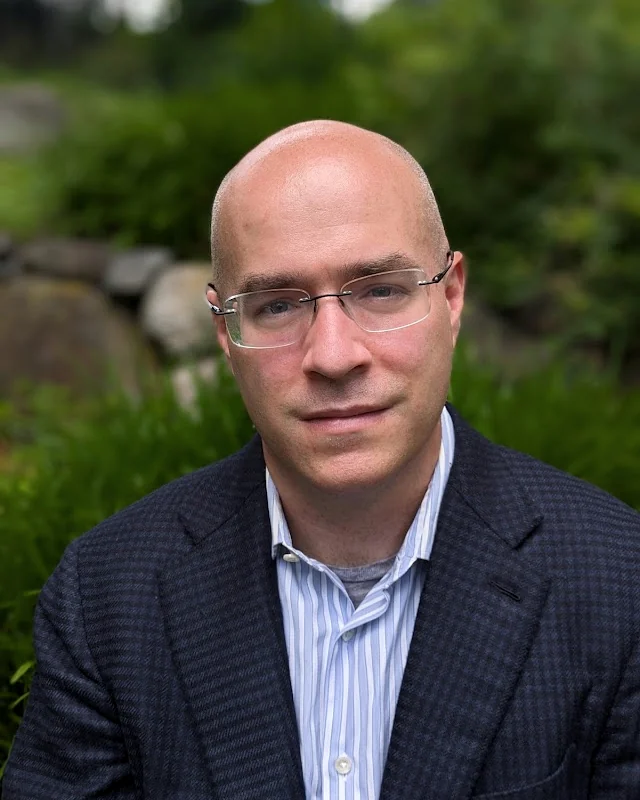
Meet Steve
Steve Taylor founded Geodesic Solutions to bring research grade quantitative analysis to the decisions that matter most to investors, public agencies and founders. He holds a PhD in Quantitative Finance from Stony Brook University and has published more than 35 papers on risk, valuation and the use of non-traditional mathematical and statistical methods in finance, in journals including Quantitative Finance, The European Journal of Finance and the Annals of Operations Research.
Steve spent seven years as a quantitative research analyst at Tudor Investment Corporation, Hutchin Hill Capital, Morgan Stanley and Bloomberg, and was a member of the technical staff at MIT Lincoln Laboratory.
His policy work applies the same tools to public problems. He led an NJIT faculty-student team that valued Social Security benefits and their risk for the typical American, and he has organized research groups at NYU, MIT and the University of Chicago.
Why “Geodesic”?
In geometry, a geodesic is the shortest path between two points on a curved surface. Real world data is rarely flat: markets shift regimes, data is noisy, and constraints bend the problem. Our job is to find the most direct, defensible route from the question you have to the answer you can act on.
We apply the same discipline across finance, public policy and venture investing: practical about what decision makers need, and uncompromising about getting the analysis right.
Firm wide Partnership Model
Every member of Geodesic Solutions is a partner. From the students on our bench to the domain experts who lead our engagements, everyone who contributes to a project shares in the revenue it earns.
This model aligns incentives across the firm. Our people are invested in the success of each engagement as a whole, not just their own piece of it, so clients work with a team that cares about the outcome as much as they do.
It also keeps us collaborative. Partners draw on the full bench whenever a problem calls for it, because the whole firm benefits when any one of us does great work. For our student partners, revenue sharing is how they help finance their university tuition while solving real problems.
Philanthropy and Education
We actively support educational organizations that we believe provide a template for improving the current state of education, including Math for America, which recognizes and supports outstanding public school math and science teachers.
We also fund graduate student research scholarships that help the next generation of quantitative researchers pursue their work.
And we encourage mentorship of high school students in math, statistics, and physics, with members of our firm sharing their time and experience with the students who will take on tomorrow’s hard problems.